Why Your Hands Swell on Longer Hikes and What It Actually Means
Quick Answer: Hands swell on long hikes mainly because they hang below heart level for hours while your arms swing, so blood and fluid pool in them, and because heat causes blood vessels near the skin to dilate. It is very common and usually harmless. Raising your hands periodically, using trekking poles, removing rings before you set off, and maintaining sensible fluid and sodium balance all help. Swelling with headache, nausea, or confusion is a different situation and needs immediate attention.
An hour in, your rings feel tight. By hour three your fingers look like they belong to someone else and your hands feel stiff and slightly numb.
Almost every long-distance walker experiences this and very few have been told why. Most of it is simple physics, and there are two causes worth taking more seriously.
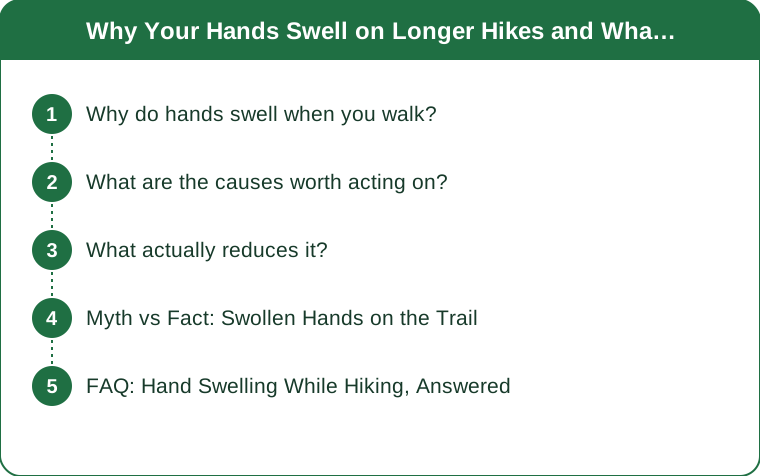
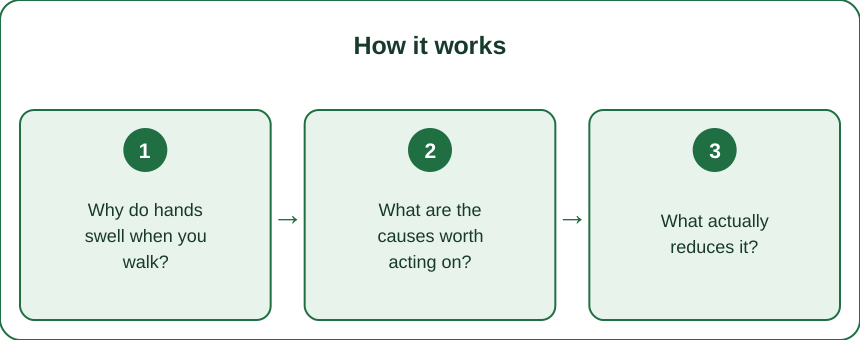
Why do hands swell when you walk?
Three ordinary mechanisms, and they all point the same direction.
Gravity and arm position. Your hands spend hours below your heart, swinging at the end of a limb. Blood and interstitial fluid pool in the lowest, most dependent part of the circuit. There is no muscle pump in the hand equivalent to the calf pump in the leg, so nothing actively returns it.
Heat and vasodilation. As you warm up, blood vessels near the skin dilate to help dump heat. This is a normal thermoregulatory response and it increases blood volume in the extremities. Anyone who has noticed the swelling is much worse on a hot day is observing this directly.
Arm swing and centrifugal effect. The repeated swinging of the arms adds a mild outward force that helps push fluid toward the hands. This is a smaller contributor than the first two and it is real, and it explains why the effect is stronger on flat trail walking with a full arm swing than on scrambling where hands are used.
Which is why it builds over hours rather than appearing immediately. Fluid accumulates gradually, and it typically resolves within a short period of finishing or of raising the hands.
And why some people get it far more than others. Individual circulation, how much you sweat, hydration and sodium status, and whether you use poles all vary widely. It is not an indicator of fitness.
What are the causes worth acting on?
Two, and one of them is a genuine emergency.
Sodium balance, in both directions. On long efforts in heat, you lose sodium in sweat. If you replace fluid with plain water alone in large volumes, blood sodium concentration can fall. Mild dilution contributes to fluid moving into tissue and to swelling. In its severe form this is exercise-associated hyponatraemia, which is a serious and occasionally fatal condition, and it is genuinely reported in long-distance hikers and endurance athletes.
The warning signs that separate the two. Ordinary hand swelling is painless, symmetrical, and comes with no other symptoms. Swelling that appears alongside headache, nausea, vomiting, confusion, disorientation, or a marked drop in performance is a medical emergency and needs immediate help, not more water. Drinking more plain water in that situation makes it worse. This is the one thing in this article worth remembering above all else. This is general information, not medical advice.
Pack straps affecting circulation. A hip belt or shoulder straps carrying weight incorrectly can compress structures at the shoulder and affect the arm. This blog has covered the hip belt mistake specifically, and shoulder strap tension is the related issue. If the swelling is markedly worse on one side, or comes with tingling in specific fingers, look at the pack rather than at fluid.
Medication and existing conditions. Some medications affect fluid retention, and heart, kidney, and thyroid conditions all can. Anyone with existing swelling in the legs or ankles, or with a relevant diagnosis, should treat trail swelling as something to mention to their doctor rather than as a hiking quirk.
When it does not resolve. Swelling that persists for hours after finishing, or that is asymmetrical, warm, or painful, is not the ordinary version and deserves a proper look.
What actually reduces it?
Practical measures, in rough order of effectiveness.
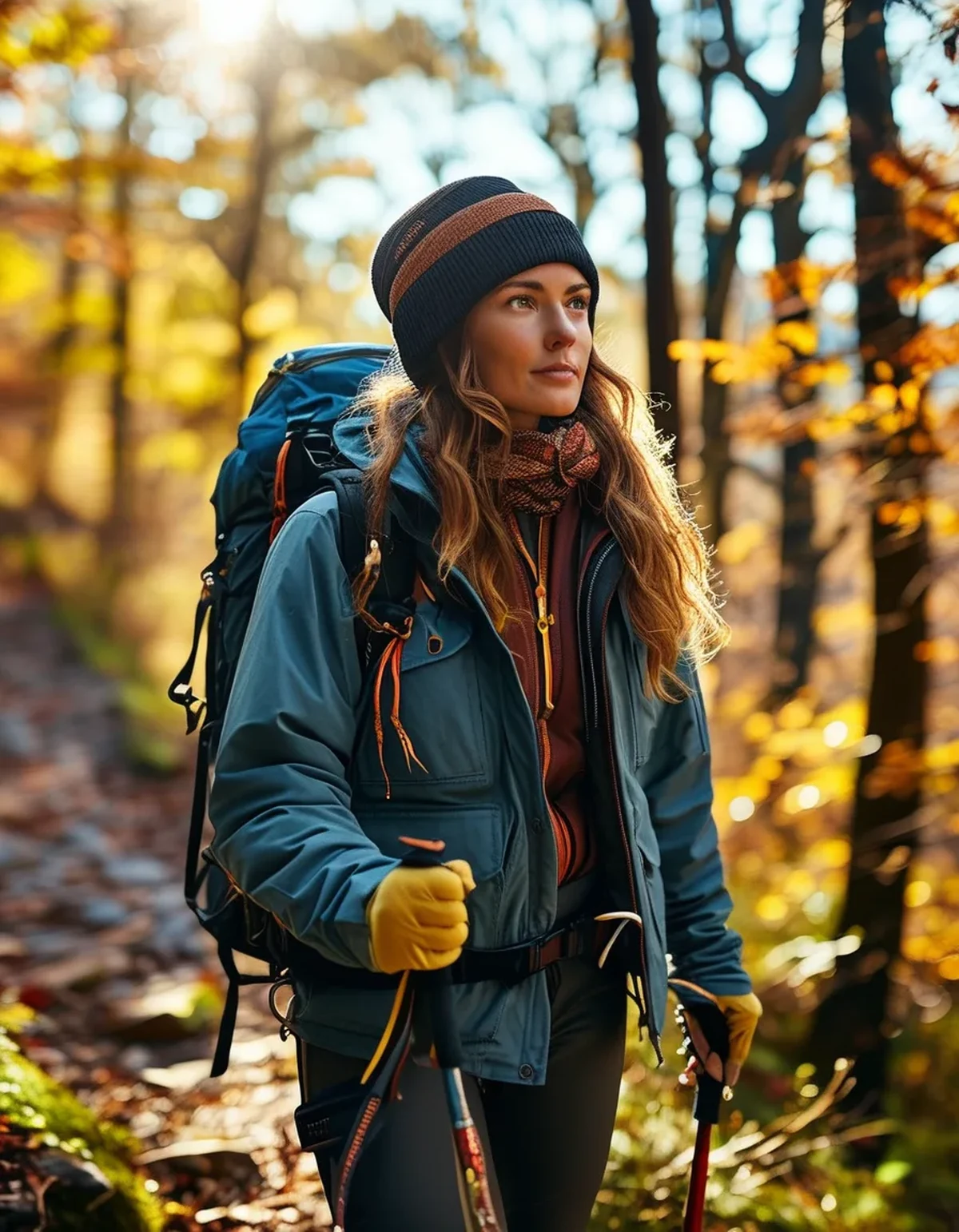
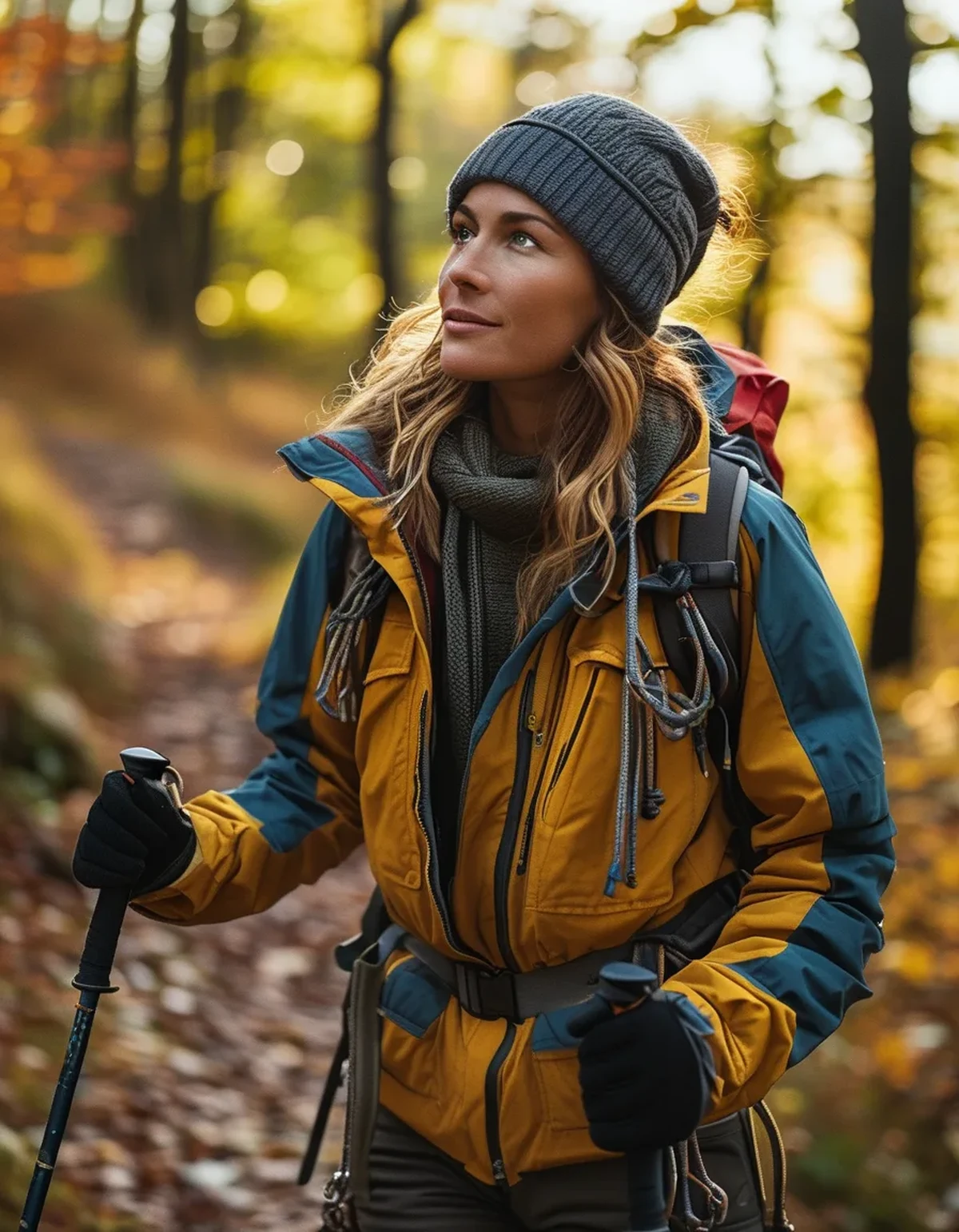
Use trekking poles. The single best intervention. Poles keep your hands raised and engaged, provide a mild pumping action through the grip, and prevent the passive dangling that causes most of the problem. Anyone who gets significant hand swelling and does not use poles should try them for that reason alone, quite apart from the load-sharing benefit. This blog has covered getting pole height right.
Raise your hands periodically. Every twenty minutes, lift your hands above your heart for thirty seconds, or clasp them behind your head while walking. It looks odd and it works quickly.
Open and close your fists regularly. Making a fist repeatedly gives the hand something like a muscle pump and moves fluid out. Twenty repetitions every so often makes a noticeable difference.
Take rings off before you start. This is the practical one. A ring that fits normally can become genuinely stuck on a swollen finger, which is at best uncomfortable and at worst a medical problem requiring the ring to be cut off. Put them in a zipped pocket.
Check your pack straps. Shoulder straps should not be carrying most of the load. The hip belt should be, which is the point covered in this blog’s hip belt article. Loosening shoulder straps and letting the hips take the weight relieves pressure on the shoulders and arms.
Manage sodium alongside fluid on long hot days. On efforts over a couple of hours in heat, replacing electrolytes as well as water is sensible. Salty snacks work, and this is not a reason to buy anything special for a short walk in cool weather.
Loosen anything tight at the wrist. Watch straps and cuffs restrict return and are easy to overlook.
Seasonal note: hand swelling generally reduces in cooler weather because less vasodilation is happening, so if you get it badly in summer, autumn hikes are the easy season. Cold weather brings the opposite problem, and gloves that are too tight create their own restriction.
Myth vs Fact: Swollen Hands on the Trail
Myth: Swollen hands mean you are dehydrated. Fact: Usually the opposite direction if anything. Ordinary swelling is caused by fluid pooling in dependent limbs and by heat-driven vasodilation. Drinking substantially more plain water in response can push you toward diluted blood sodium, which is the dangerous version.
Myth: It means you are unfit. Fact: It affects experienced long-distance hikers and beginners alike. It is a function of arm position, heat, and duration, not of fitness.
Myth: You should stop and rest until it goes down. Fact: It typically resolves shortly after you finish or after raising your hands. Stopping is not necessary unless there are other symptoms. Poles and periodic hand raises manage it while you keep moving.
Myth: Compression gloves fix it. Fact: They may help some people and they address the symptom rather than the cause. Poles, hand raises, and fist pumping are cheaper and more effective for most.
Myth: More electrolytes is always the answer. Fact: Electrolyte replacement matters on long efforts in heat. On a two-hour walk in cool autumn weather it is unnecessary, and treating every instance of swelling as an electrolyte problem misses the main mechanism, which is simply that your hands are hanging down.
Myth: It is always harmless. Fact: Almost always, and swelling combined with headache, nausea, confusion, or disorientation is a medical emergency and needs immediate help. Knowing that distinction is the reason this article exists.
FAQ: Hand Swelling While Hiking, Answered
Why do my hands swell up when I hike?
Mainly because they hang below your heart for hours with no muscle pump to return fluid, and because heat causes blood vessels near the skin to dilate. Arm swing adds a small further effect. It is very common and usually harmless.
How do I stop my hands swelling on a long walk?
Use trekking poles, which is the most effective single measure. Raise your hands above your heart for thirty seconds every twenty minutes, open and close your fists regularly, and remove rings before you set off.
Is swollen hands a sign of dehydration?
No, and the assumption can be harmful. Drinking large volumes of plain water in response can dilute blood sodium. Swelling with headache, nausea, or confusion is an emergency, not a hydration problem. This is general information, not medical advice.
TL;DR:
- Hands swell because they hang below heart level for hours with no muscle pump, and because heat dilates blood vessels near the skin.
- It is common, usually harmless, and unrelated to fitness. It resolves shortly after finishing.
- Trekking poles are the most effective fix. Add periodic hand raises, fist pumping, and take your rings off first.
- Swelling with headache, nausea, or confusion is a medical emergency, and drinking more plain water makes that version worse.
If you get this regularly and do not use poles, that is the experiment worth running on your next hike.
Keep Reading
This article is for general informational and styling purposes only. Fit, sizing, and product availability may vary.