Why Your Socks Prevent More Blisters Than Your Boots Ever Will
Quick Answer: Blisters form from repeated shear between skin layers, accelerated by moisture and heat. Socks sit directly at that interface: they manage moisture, provide the sacrificial layer that absorbs shear, and change the effective fit of the boot. A merino or synthetic hiking sock — never cotton — with a thin liner underneath prevents more blisters than any boot upgrade, and costs a fraction as much.
The boots were the expensive decision, and you took your time over them.
The socks were whatever was clean.
Guess which one is producing the hot spot at mile four.
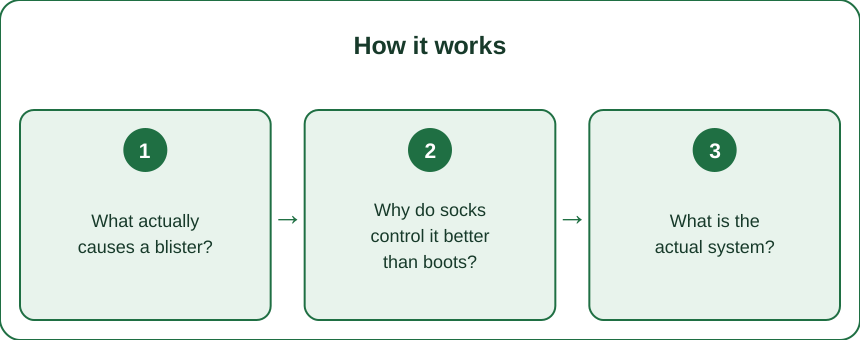
What actually causes a blister?
Shear, not rubbing, and the distinction changes what prevents it.
Blisters are a shear injury. Layers of skin move against each other repeatedly until they separate and fluid fills the gap. It happens inside the skin, not on the surface.
Moisture makes it dramatically worse. Damp skin has a much higher friction coefficient than dry skin, and wet skin is also softer and more easily damaged. This is why blisters cluster on wet days and long descents.
Heat accelerates everything. Warm feet sweat more, and warmer skin is more susceptible. Boots that run hot produce more blisters independent of fit.
Pressure points concentrate shear. A seam, a lace pressure point or a boot that is fractionally too large all localise the movement.
Time and repetition matter more than intensity. A blister is thousands of small movements, which is why a long easy walk can produce more damage than a short hard one.
And it is largely preventable. Unlike most hiking injuries, blisters have well-understood mechanisms and interventions that work reliably.
Why do socks control it better than boots?
Because socks sit exactly where the damage happens.
They are the sacrificial layer. Movement is absorbed between the sock and the boot rather than between skin layers. A good sock is doing exactly that job.
They manage moisture at the source. Merino wool moves moisture away from skin and retains warmth even when damp. Synthetics wick fast and dry quickly. Cotton absorbs and holds it, which is why cotton socks are the single most common cause of hiking blisters.
A liner sock creates a slip plane. A thin liner under a thicker sock means the two socks move against each other rather than the sock moving against skin. This is the most effective blister prevention available to most hikers.
Sock thickness fine-tunes boot fit. A slightly loose boot with a thicker sock can fit better than a perfect boot with a thin one. Feet also swell half a size or more on long hikes, which sock choice can accommodate.
Seams are under your control. Cheap socks put a thick seam across the toes. Hiking socks either move it or flatten it.
And you can change them mid-hike. You cannot change your boots at the halfway point. Swapping to dry socks at lunch is a genuinely effective intervention and it takes three minutes.
What is the actual system?
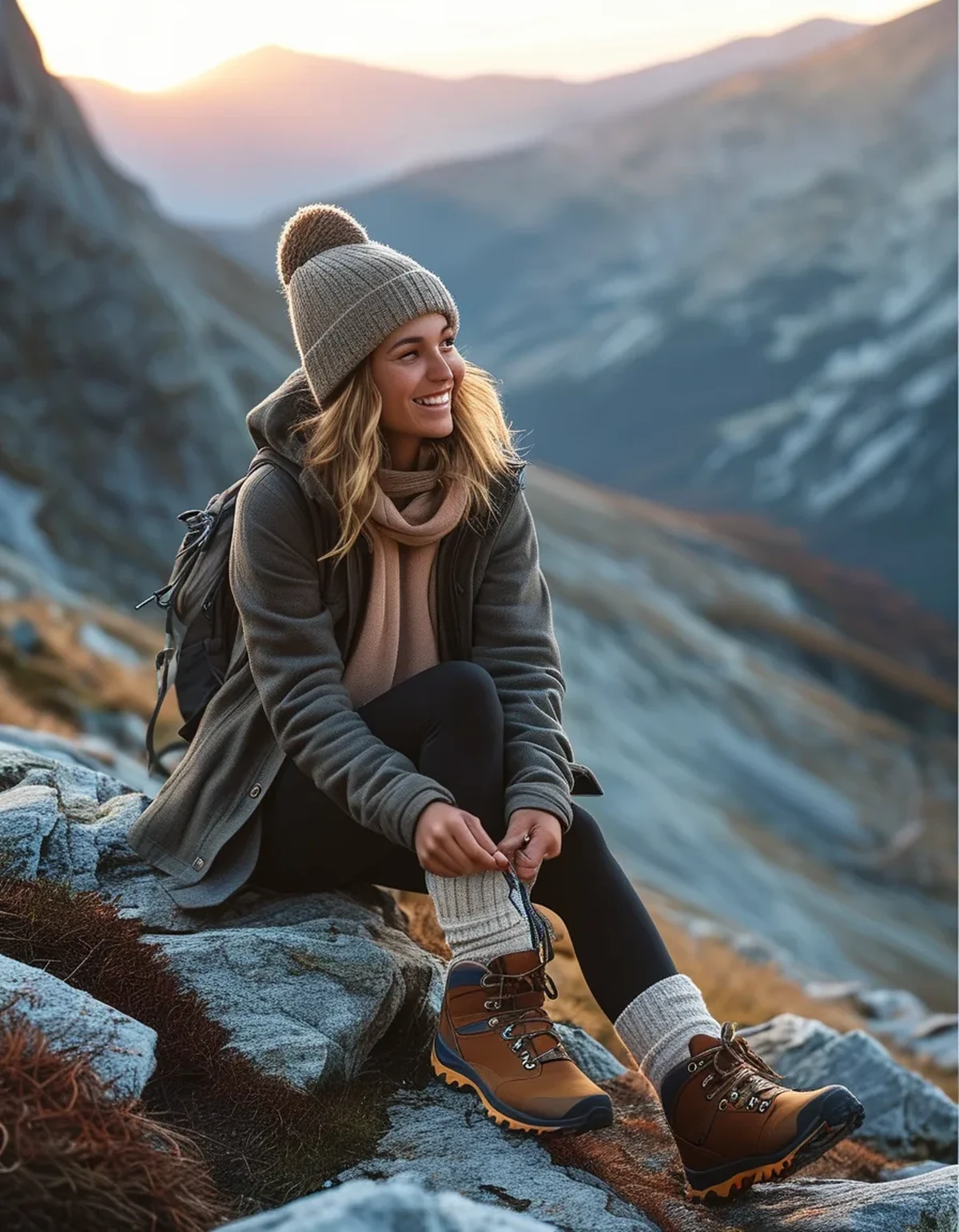
Six things, in the order they matter.
Never cotton. Not the sock, not the liner. This single rule prevents most blisters.
Merino or synthetic hiking socks. Cushioned where you need it, thin where you do not. Buy two pairs rather than one expensive pair, so you can swap.
Add a thin liner sock. The slip plane it creates is the highest-value addition for anyone who blisters regularly.
Carry a spare pair and change at the halfway point. Even on a day hike. Dry socks reset the moisture clock completely.
Tape known hot spots before you start. Not after. Once a hot spot exists, damage is already underway. Kinesiology tape or purpose-made blister tape both work.
Lace properly for the descent. A heel lock lacing pattern stops the foot sliding forward, which is the source of most toe and heel blisters on downhills.
Autumn note: wet grass, damp trails and morning dew all soak boots and socks from the outside, and autumn hikes involve far more of that than summer ones. A spare pair of socks matters more in October than in July, and gaiters are worth carrying earlier in the season than most people think.
5 Blister Mistakes That Are Easy to Fix
Cotton socks. Still the most common cause, and the easiest fix on this list.
One pair for the whole hike. Changing socks at the halfway point is a three-minute intervention with a large effect.
Treating a hot spot as something to push through. A hot spot is the warning stage. Stopping to tape it takes five minutes; a blister costs you the rest of the walk and the next two days.
Buying boots without the socks you will hike in. Boot fit and sock thickness are one system. Fitting boots in thin socks and hiking in thick ones changes the fit entirely.
Ignoring lacing on descents. A foot sliding forward on a downhill produces toe blisters no sock can prevent. Heel lock lacing fixes it.
And the one people learn the hard way: feet swell over a long day. Boots that fit perfectly at the trailhead can be tight by mile six, which is why hikers loosen laces at lunch as standard practice.
FAQ: Hiking Socks and Blisters, Answered
Do liner socks really work?
Yes. Creating a slip plane between two sock layers is one of the best-supported blister prevention approaches available.
Merino or synthetic?
Merino for warmth when damp and odour resistance; synthetic for fast drying and durability. Both are far better than cotton.
Should I tape before or after a hot spot appears?
Before, on any spot you know from experience. Prevention is far more effective than treatment.
How thick should hiking socks be?
Matched to the boot you fitted them with. Thicker is not automatically better, and a too-thick sock in a snug boot creates pressure points.
Should I pop a blister?
Generally leave it intact if it is not painful, as the skin is a natural barrier. If it must be drained, do so cleanly and keep it covered. If it is deep, bloody or shows signs of infection, seek medical advice.
Do more expensive boots prevent blisters?
Only through better fit. A well-fitted inexpensive boot with good socks beats an expensive boot with cotton socks every time.
TL;DR:
- Blisters are a shear injury made worse by moisture and heat — all three sit at the sock layer.
- Never cotton. Merino or synthetic hiking socks, and a thin liner to create a slip plane.
- Carry a spare pair and change at the halfway point, even on day hikes.
- Tape known hot spots before you start, and use heel lock lacing for descents.
- Fit boots with the socks you will actually hike in; feet swell half a size over a long day.
Buy two pairs of proper socks before you buy anything else for the trail. It is the cheapest fix in hiking.
Keep Reading
This article is for general informational and styling purposes only. Fit, sizing, and product availability may vary.