Why Plus-Size Hiking Boots Genuinely Take Longer to Break In
Quick Answer: Break-in time depends heavily on how much pressure and flex the boot material experiences per step, and a heavier body weight applies more consistent pressure to the boot’s structural materials with each stride, which can accelerate certain aspects of break-in (material softening) while also increasing the risk of rushing the process and developing blisters or hot spots before the boot has genuinely adapted — a longer, more gradual break-in schedule, with careful attention to specific pressure points, tends to produce a better final fit than following a generic, one-size-fits-all break-in timeline.
Generic hiking boot break-in advice is often built around an assumed average body weight and foot shape, which is part of why it doesn’t always match plus-size hikers’ actual experience.

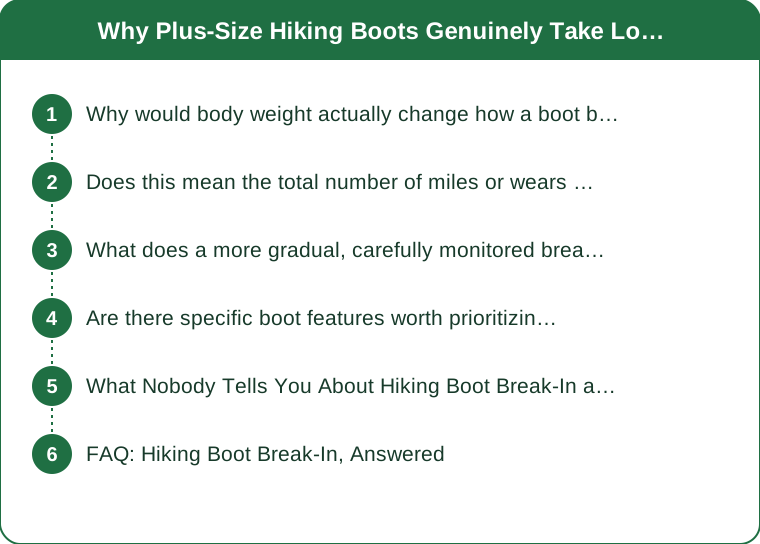
Why would body weight actually change how a boot breaks in, mechanically?
A boot’s upper material, particularly around structural areas like the ankle collar and toe box, needs to gradually stretch and mold to the specific pressure pattern of an individual foot and stride, and a heavier body weight applies more consistent, higher-magnitude pressure per step to these materials. This can mean certain break-in aspects happen somewhat faster in terms of material softening, but it also means any fit issue not yet resolved is more likely to cause a blister or hot spot sooner, since the pressure at problem points is correspondingly higher.
Does this mean the total number of miles or wears needed for break-in is actually different, or just the risk profile?
Both can be affected — some hikers find the material softening happens over a similar mileage range, but the margin for error is smaller, meaning skipping ahead to a long hike before the boot has genuinely adapted carries higher risk of a significant, painful hot spot developing mid-hike rather than being caught early on a short walk. This is why a more gradual, carefully monitored break-in schedule tends to work better, even if the total mileage needed ends up similar.
What does a more gradual, carefully monitored break-in schedule actually look like in practice?
Starting with short walks around the house or neighborhood, checking feet carefully for any developing hot spots after each wear, and only progressing to longer distances once several short wears have produced no problem areas is a more conservative, protective approach than jumping straight into a long trail hike. This lets any fit issue get caught and addressed (with moleskin, different socks, or boot adjustment) while the stakes are still low, rather than discovering it miles into a remote trail.

Are there specific boot features worth prioritizing for a smoother break-in experience?
Boots with a genuinely adjustable lacing system, a slightly more flexible upper material rather than very stiff full-grain leather, and a wider toe box option tend to accommodate a broader range of foot shapes and pressure patterns with less prolonged discomfort during break-in. Trying on boots later in the day, when feet are naturally slightly more swollen, also helps ensure the fit accounts for real-world foot size rather than an artificially smaller morning measurement.
What Nobody Tells You About Hiking Boot Break-In and Body Weight
Sock choice and thickness meaningfully change the effective break-in pressure pattern, and this is an easy, low-cost variable to adjust before assuming the boot itself is the problem — a thicker cushioned sock changes how pressure is distributed inside the boot during break-in, and experimenting with sock thickness alongside the boot itself, rather than assuming the boot needs to be exchanged, sometimes resolves a persistent hot spot faster.
FAQ: Hiking Boot Break-In, Answered
How many short walks are generally recommended before attempting a longer hike in new boots?
Many experienced hikers recommend at least four to six short walks, totaling several miles, with no developing hot spots, before attempting a hike of several miles or more.
Is it worth having boots professionally fitted rather than buying online, given this longer break-in consideration?
A professional fitting, where available, can catch fit issues before purchase that would otherwise only surface during break-in, making it a worthwhile step particularly for a first pair of hiking boots.
Does a longer break-in period mean the boot brand or model was a poor choice?
Not necessarily — a longer, more careful break-in process is a reasonable precaution regardless of brand, and doesn’t by itself indicate the boot is a poor match, as long as it’s genuinely improving with each wear.
TL;DR:
- Higher body weight applies more consistent pressure per step, which changes the boot break-in risk profile
- A gradual, monitored break-in schedule catches fit issues early, before they become a mid-hike problem
- Adjustable lacing, flexible uppers, and wider toe boxes tend to accommodate break-in more comfortably
- Sock thickness is an easy variable to adjust before assuming the boot itself needs to be exchanged
A longer hiking boot break-in period for a plus-size hiker isn’t a flaw in the boot or the foot — it’s a reasonable, protective adjustment to a genuinely different pressure pattern, and planning for it prevents avoidable trail discomfort.
Keep Reading
This article is for general informational and styling purposes only. Fit, sizing, and product availability may vary.