Why the Wrong Trekking Pole Height Makes Hills Feel Harder Than They Actually Are
Quick Answer: Trekking poles set too long force the shoulders and wrists into an awkward, energy-costly angle on flat ground and uphill sections, while poles set too short don’t provide enough leverage on descents — the general starting guideline is elbows bent at roughly a 90-degree angle on flat terrain, then shortened for climbs and lengthened for descents, adjustments most hikers never make.
If trekking poles have ever felt like they’re working against you rather than for you, the height — not the poles themselves — is the first thing worth checking.
Why does pole height matter enough to actually change how hard a hike feels?
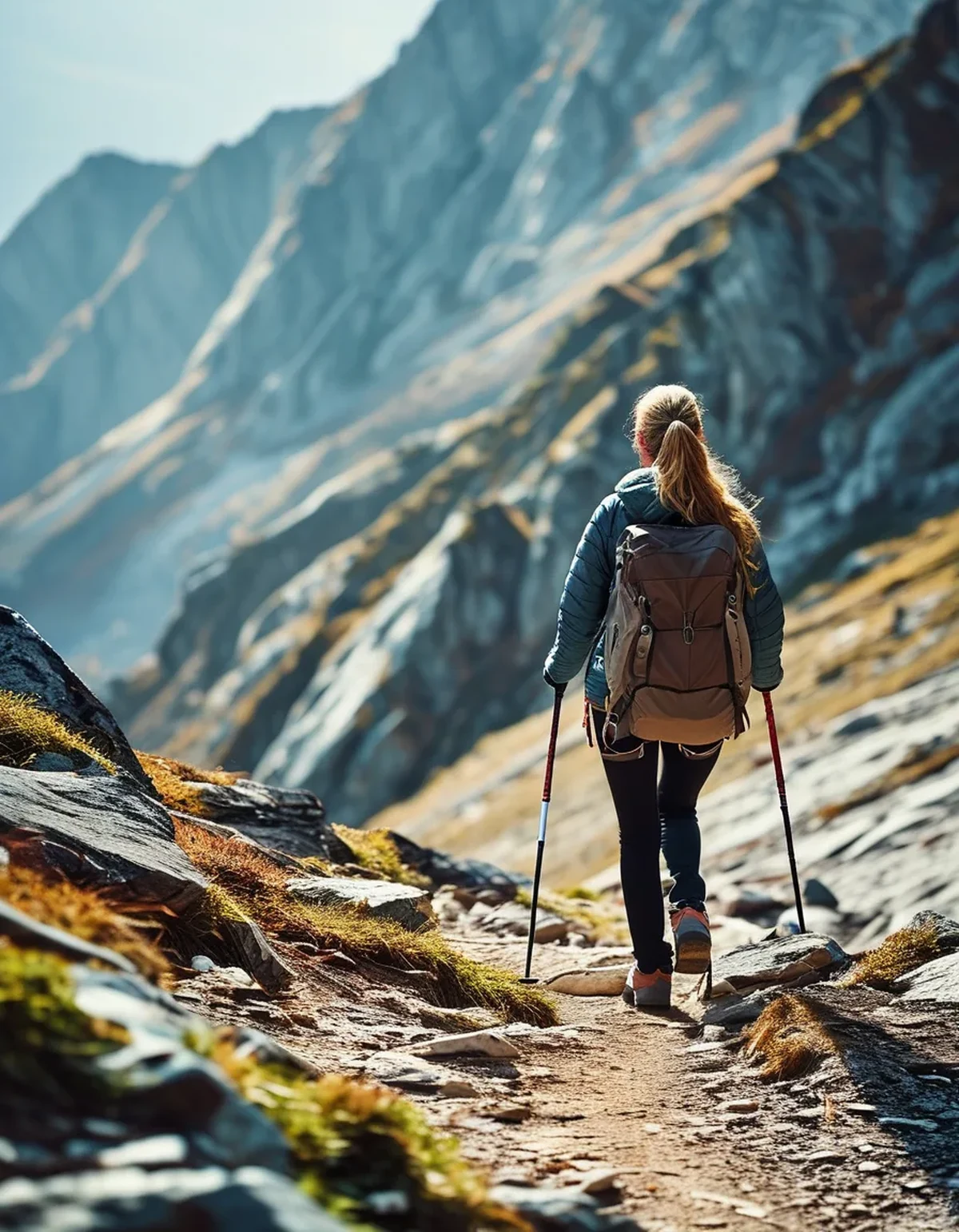
Poles set at the correct height let the arm transfer force efficiently through a roughly 90-degree elbow angle on flat ground, converting upper-body effort into forward propulsion and reduced load on the legs — poles set too long push the elbow into an extended, less mechanically efficient angle, which wastes energy on every single plant of the pole across a multi-mile hike.
Should pole height actually change between climbing and descending, or is one setting fine for the whole hike?
It should change — shortening poles by a few centimeters on sustained climbs keeps the elbow angle efficient on uphill terrain, while lengthening them on descents provides better reach and leverage for controlling downhill momentum — most trekking poles have quick-adjust locks specifically for this, though many hikers set one height and leave it for an entire trail regardless of terrain change.
Does this matter more specifically for plus-size hikers than for others?
To some degree, yes — carrying more body weight through descents in particular puts more cumulative load on the knees, and correctly sized poles meaningfully offload some of that impact through the arms instead, making proper height adjustment a bigger practical lever for knee comfort on longer or steeper trails than it might be for a lighter hiker.
Is there a simple way to check pole height without special measuring tools?
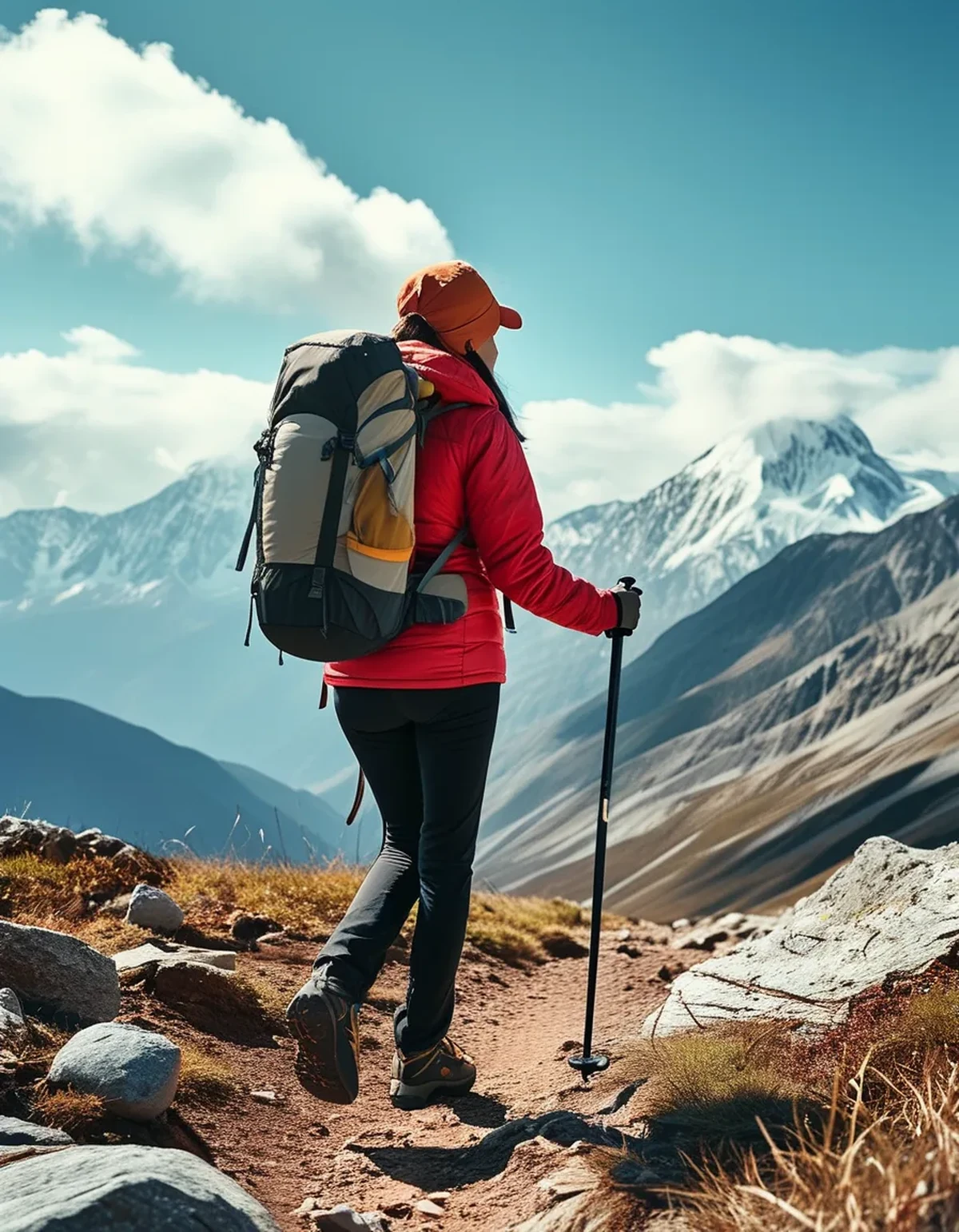
Standing on flat ground, gripping the pole handle with the tip touching the ground next to your foot, the elbow should form roughly a 90-degree angle — this quick check, done before setting off and rechecked if terrain changes significantly, catches most height mistakes without needing precise measurement.
Does grip technique matter as much as height, or is height the bigger factor?
Height is generally the bigger factor for overall effort, but grip matters for control — a relaxed grip through the strap (letting the strap bear some load rather than gripping the handle tightly) reduces hand and wrist fatigue on long hikes, and works best in combination with, not instead of, correct height.
FAQ: Trekking Pole Height and Fit, Answered
Do trekking poles actually reduce the physical toll of a long hike, or is that overstated?
Research on trekking pole use generally supports a measurable reduction in per-step impact load, particularly on descents, when poles are used with reasonably correct height and technique.
Is it worth buying adjustable poles versus fixed-length poles?
For most hikers, adjustable poles are worth the modest extra cost specifically because they allow the climb/descent height changes discussed here, which fixed-length poles can’t accommodate.
Should trekking pole height be rechecked partway through a long hike?
It’s reasonable to recheck after a significant grade change, since sticking with one setting through a very mixed-terrain hike gives up some of the efficiency benefit adjustable poles are designed to provide.
TL;DR:
- Poles set too long push the elbow into a less efficient angle, wasting energy on flat and uphill terrain
- Shortening poles for climbs and lengthening them for descents is a real, underused adjustment
- Correct height offloads more knee impact through the arms, which matters more with more body weight
- A quick 90-degree elbow check on flat ground catches most height mistakes before a hike even starts
Poles that feel like extra baggage are usually just set wrong — a height fix, not new gear, is often the actual answer.
Keep Reading
This article is for general informational and styling purposes only. Fit, sizing, and product availability may vary.