Why Hiking Boot Break-In Often Takes Longer for Plus-Size Hikers
Quick Answer: Boot materials break in through repeated flexing and pressure that gradually molds stiff areas to the shape of the foot, and more consistent, higher body weight accelerates some of that flex but also means the boot needs to accommodate more sustained pressure across a wider foot-to-boot contact area — which often means break-in benefits from more deliberate, gradual mileage rather than fewer, longer sessions.
A slower, more structured break-in approach tends to produce better results than assuming extra body weight alone speeds the process up.
Does more body weight actually speed up boot break-in?
Not consistently — while more weight does flex stiff materials faster in some areas, it also increases pressure on contact points like the toe box and heel counter, which can create hot spots or blister risk faster than the material actually softens, making a rushed break-in riskier rather than simply quicker.
Why does pressure distribution matter more here than raw weight?
How weight is distributed across the boot’s contact points during walking — not just total body weight — determines where materials flex fastest, and uneven pressure distribution common with a wider or higher-volume foot can mean certain areas of a boot need more deliberate breaking-in than others.

What’s a more effective break-in approach?
Short, incremental wear sessions — around the house, then short walks, then gradually longer hikes — allow problem areas to be identified and addressed (with moleskin, different socks, or minor adjustments) before committing to a long trail day, rather than assuming the boots will simply adapt on their own during a single long hike.
Does boot material type affect break-in time significantly?
Yes — full-grain leather boots generally take meaningfully longer to break in than boots using synthetic or mixed materials, so the material itself is often a bigger factor in break-in duration than body weight, and choosing a boot with some synthetic components can shorten the process if long break-in periods are a concern.
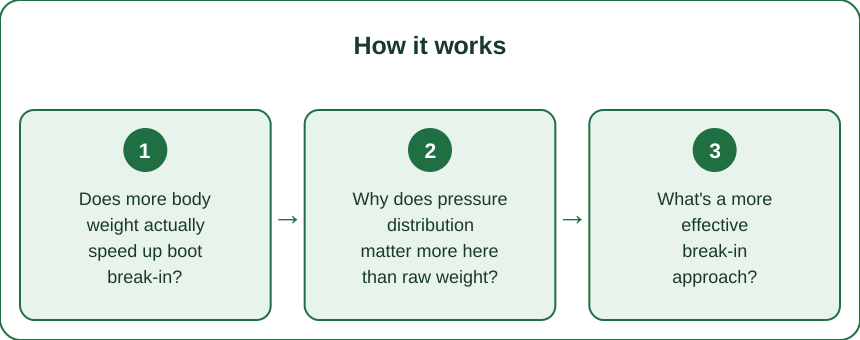
Are there ways to speed up break-in safely?
Wearing boots around the house for short periods before any trail use, using thicker socks during initial wear to accelerate material stretch in key areas, and addressing hot spots immediately rather than pushing through them all help shorten the process without risking blisters on an actual hike.
TL;DR:
- Extra body weight doesn’t reliably speed up break-in and can increase blister risk if rushed
- Pressure distribution across contact points matters more than total weight alone
- Gradual, incremental wear sessions identify problem areas before a long hike
- Boot material type affects break-in time more directly than body weight does
A patient, structured break-in process tends to produce a better-fitting boot than assuming any body type breaks boots in faster.
Keep Reading
This article is for general informational and styling purposes only. Fit, sizing, and product availability may vary.