Why Plus-Size Hiking Boots Genuinely Take Longer to Break In (and How to Speed It Up)
Quick Answer: Wider, higher-volume boot constructions — common in plus-size and wide-fit hiking boots — often use slightly thicker leather or reinforced panels for structural support, which genuinely takes more flex cycles to soften than a narrower, lighter boot.
It’s not your imagination or bad luck — there’s a real material reason this happens.
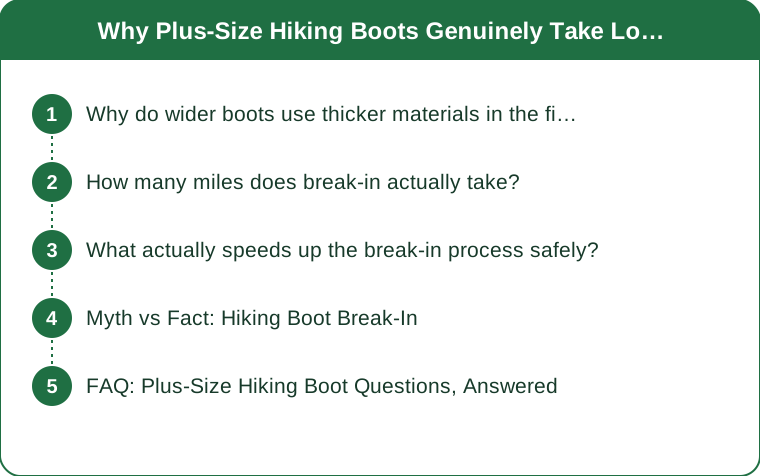
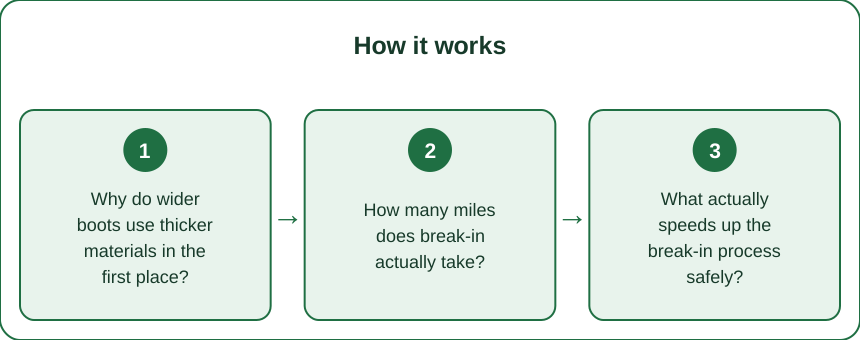
Why do wider boots use thicker materials in the first place?
Boots built with more volume and width need additional structural support to maintain ankle stability and prevent the upper from collapsing sideways under load. That reinforcement often comes from thicker leather panels or additional stitching, both of which are more rigid initially and take more flex cycles to break in compared to a minimalist, narrower boot design.
How many miles does break-in actually take?
For a reinforced wide-fit leather boot, 30-40 miles of gradual wear is a more realistic break-in estimate than the 10-15 miles often quoted for lighter boots. Rushing a long hike in stiff new boots before they’ve had that gradual break-in is one of the most common causes of blisters and hot spots on new boot purchases.
What actually speeds up the break-in process safely?
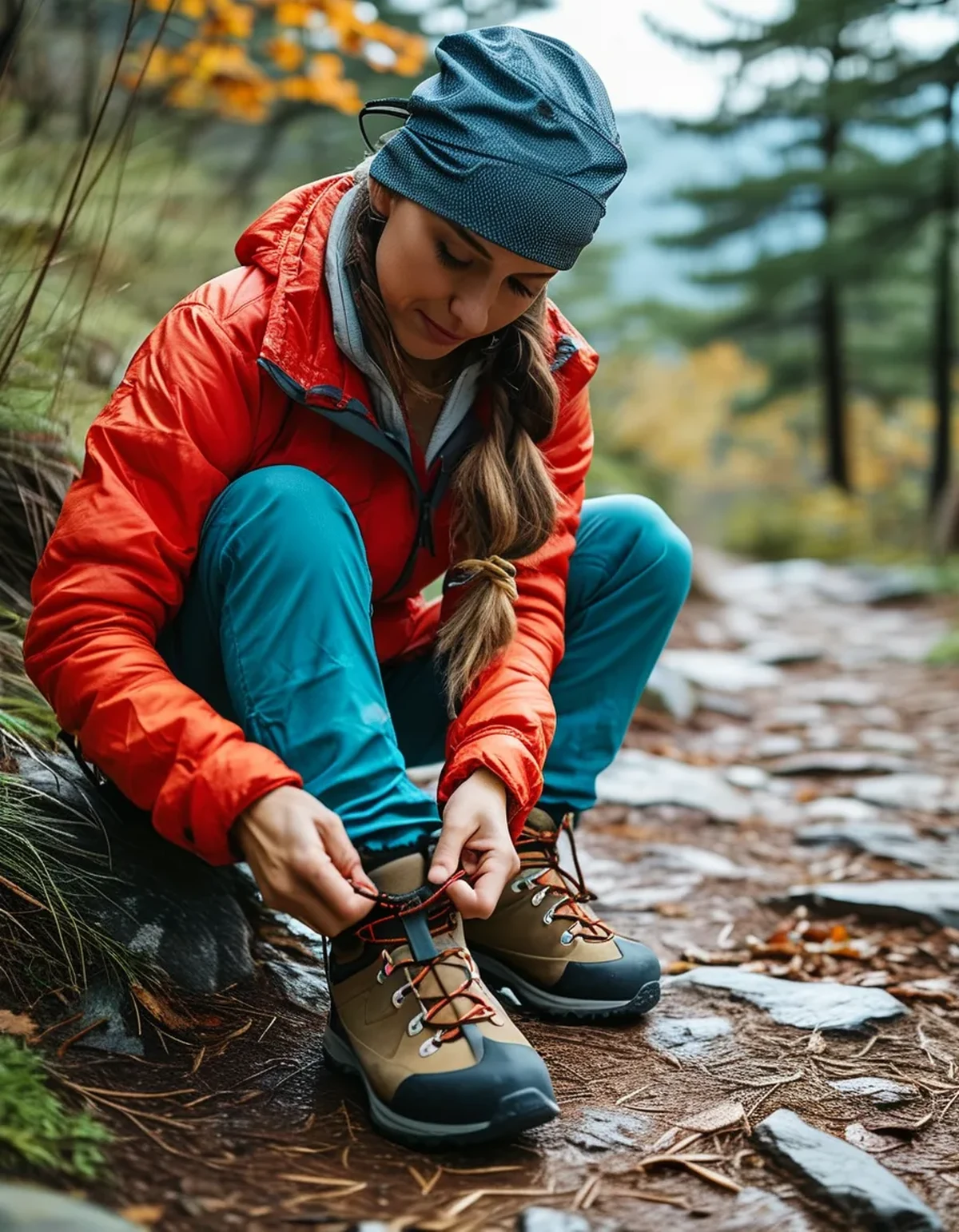
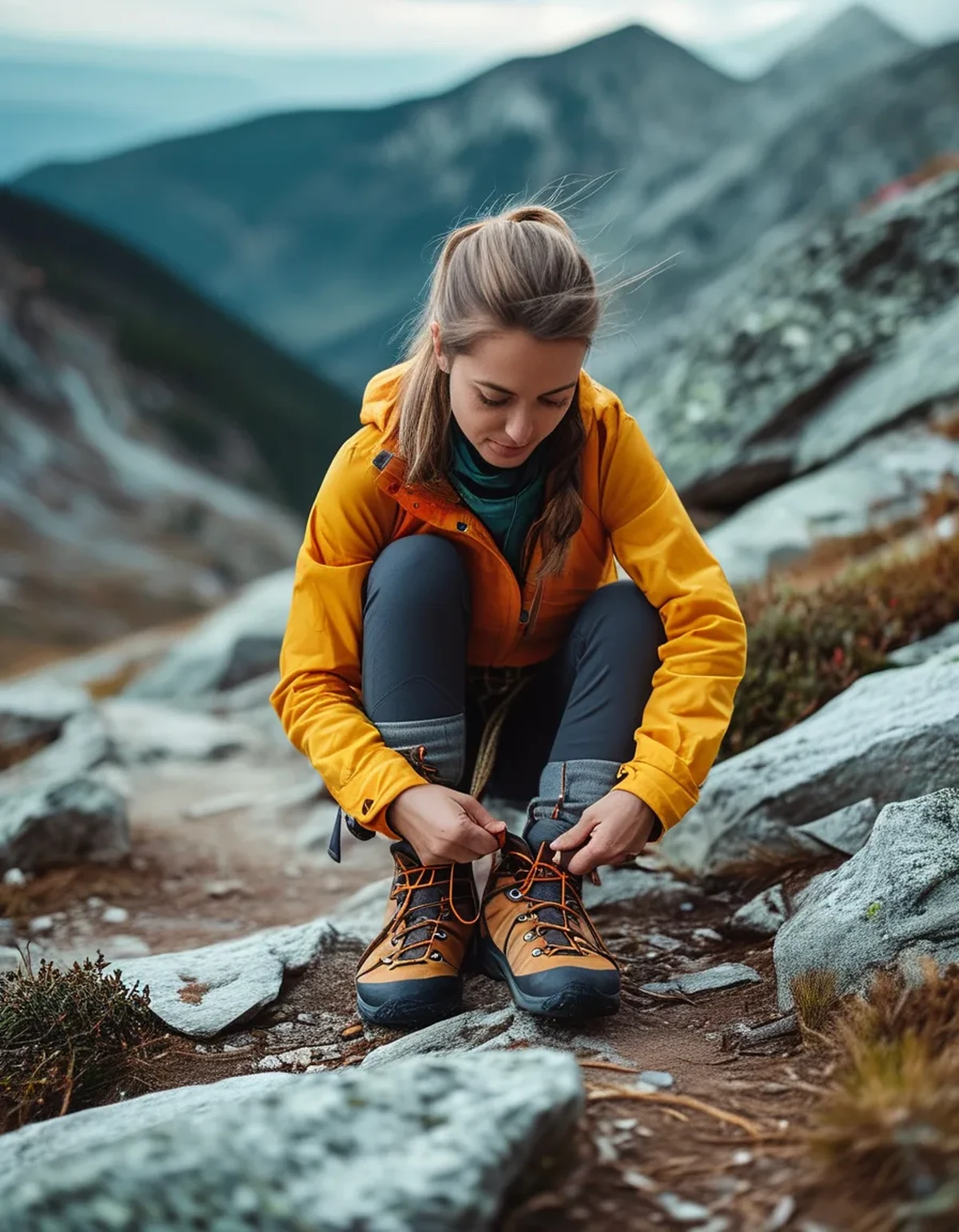
Wearing the boots around the house and on short walks before any real hike lets the leather flex gradually without the risk of a blister forming miles from the trailhead. Some hikers also use a leather conditioner on stiff areas, which can soften material faster, though it should be tested on a small area first to make sure it doesn’t affect grip or waterproofing.
Myth vs Fact: Hiking Boot Break-In
Myth: All hiking boots need roughly the same break-in time. Fact: Wider, more structurally reinforced boots commonly used in plus-size fits genuinely need more flex cycles than minimalist designs.
Myth: If boots still feel stiff after a few wears, they’re the wrong size. Fact: Stiffness alone in the first few wears is often normal break-in, not necessarily a fit problem — persistent pain in the same spot is the sign to watch for.
Myth: Break-in only matters for leather boots. Fact: Synthetic and hybrid boots also have a break-in period, though usually shorter than full-leather construction.
FAQ: Plus-Size Hiking Boot Questions, Answered
How do I tell normal break-in stiffness from a bad fit?
General stiffness across the whole boot that gradually eases is normal break-in; sharp, localized pain in the same spot every wear usually signals a fit or sizing issue that break-in won’t resolve.
Should I size up to make break-in faster?
Not as a first move — sizing up to avoid break-in often creates its own fit problems like heel slip, which can cause different injuries. Proper break-in of a correctly sized boot is the better path.
Is it okay to hike a full trail on a new pair before it’s broken in?
It’s risky — starting with shorter walks and working up to a full hike gives the material time to conform before you’re miles from help if a hot spot develops.
TL;DR:
- Wider, reinforced boot construction genuinely needs more break-in time than minimalist designs
- A realistic estimate is 30-40 miles of gradual wear, not the 10-15 often quoted
- Short walks before a real hike let the leather flex safely without risking a mid-trail blister
- General stiffness that eases over time is normal break-in — localized pain that doesn’t ease is a fit issue
Give new boots those gradual short walks before committing to a big hike — the extra patience upfront saves a much worse day on the trail.
Keep Reading
This article is for general informational and styling purposes only. Fit, sizing, and product availability may vary.